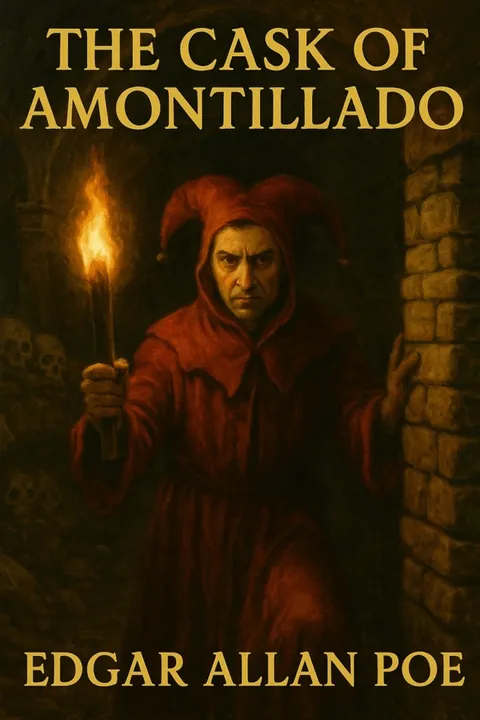
The Cask of Amontillado El barril de amontillado
«Las mil injurias de Fortunato las había soportado lo mejor que había podido; pero cuando se aventuró al insulto, juré venganza». Carnaval, vino, las bodegas de un viejo palacio, y un hombre que durante todo el camino le insiste a su amigo en que regresen arriba. Planeó su venganza de modo que el vengador no pagara nada por ella.
LeerEl comienzo en inglés, nivel A2, con traducción
Fortunato hurt me a thousand times, and I took it all in silence. But then he insulted me, and I promised myself revenge. You know the nature of my soul so well. So you will not think that I ever made a threat aloud. I said nothing at all.
Fortunato me hizo daño mil veces, y yo lo soporté todo en silencio. Pero entonces me insultó, y me prometí venganza. Usted conoce tan bien la naturaleza de mi alma. Así que no pensará que alguna vez hice una amenaza en voz alta. No dije nada en absoluto.
In the end I would have my revenge. I decided that, and I decided it completely. And because I decided it so completely, there was no risk in it. I would not only punish him: I would punish him and stay safe myself.
Al final tendría mi venganza. Eso lo decidí, y lo decidí por completo. Y como lo decidí tan completamente, no había ningún riesgo en ello. No solo lo castigaría: lo castigaría y yo mismo quedaría a salvo.
A wrong stays unpaid when the man who pays it back is caught for it. And it stays unpaid too when the man who did the wrong never feels who is punishing him.
Un agravio queda sin pagar cuando atrapan por ello al hombre que lo devuelve. Y también queda sin pagar cuando el hombre que cometió el agravio nunca siente quién lo está castigando.
I never gave Fortunato any reason to doubt me. I said nothing against him. I did nothing against him.
Nunca di a Fortunato ningún motivo para dudar de mí. No dije nada contra él. No hice nada contra él.
I smiled in his face, as I always did. He did not see the new thing behind my smile. I smiled now at the thought of his death.
Le sonreía a la cara, como siempre hacía. Él no veía lo nuevo que había detrás de mi sonrisa. Ahora yo sonreía ante la idea de su muerte.
Fortunato had one weak point. In everything else he was a man you respected, and even feared. But he was proud of one thing: he knew wine, and he knew it better than anyone.
Fortunato tenía un punto débil. En todo lo demás era un hombre al que uno respetaba, e incluso temía. Pero estaba orgulloso de una cosa: conocía el vino, y lo conocía mejor que nadie.
Few Italians really understand such things. Most of them only pretend, and they pretend when the moment is right for it. They play the expert for British and Austrian millionaires, and they sell them rubbish. In pictures and in precious stones Fortunato was the same. He was a cheat, like his countrymen.
Pocos italianos entienden de verdad tales cosas. La mayoría de ellos solo finge, y finge cuando el momento es el adecuado para ello. Hacen de expertos para los millonarios británicos y austríacos, y les venden basura. En cuadros y en piedras preciosas Fortunato era igual. Era un tramposo, como sus compatriotas.
But in the matter of old wine he was honest, and here I was no different from him. I knew the Italian wines well myself, and I bought a great deal when I could.
Pero en materia de vino añejo era sincero, y aquí yo no era distinto de él. Yo mismo conocía bien los vinos italianos, y compraba mucho cuando podía.
It was almost dark, and the carnival was at its wildest, when I met my friend. He took my hand much too warmly. He drank a lot that evening, and anybody could see it.
Casi era de noche, y el carnaval estaba en pleno desenfreno, cuando me encontré con mi amigo. Me tomó la mano demasiado calurosamente. Bebió mucho aquella tarde, y cualquiera podía verlo.
He was dressed as a fool for the carnival. He wore tight striped clothes, and on his head sat a pointed cap with bells.
Iba vestido de bufón para el carnaval. Llevaba ropa ceñida a rayas, y sobre la cabeza descansaba un gorro puntiagudo con cascabeles.
I was so glad to see him. I took his hand and shook it, and I thought I would never stop.
Estaba tan contento de verlo. Le tomé la mano y se la estreché, y creí que nunca pararía.
I said to him: “My dear Fortunato, what luck to meet you. How remarkably well you are looking today! I have just bought a big cask of wine. They call it Amontillado, and I have my doubts.”
Le dije: «Mi querido Fortunato, es una suerte encontrarlo. ¡Qué extraordinariamente bien se le ve hoy! Acabo de comprar un gran barril de vino. Lo llaman amontillado, y tengo mis dudas».
“How?” said he. “Amontillado? A big cask? Impossible! And in the middle of the carnival!”
—¿Cómo? —dijo él—. ¿Amontillado? ¿Un gran barril? ¡Imposible! ¡Y en mitad del carnaval!
“I have my doubts,” I replied. “And I was silly enough to pay the full Amontillado price without asking you first. I could not find you. I was afraid of losing a good bargain.”
—Tengo mis dudas —respondí—. Y fui lo bastante tonto como para pagar el precio completo del amontillado sin preguntarle a usted primero. No pude encontrarlo. Yo tenía miedo de perder una buena ganga.
Sigue leyendo en Readin:
Más de Edgar Allan Poe
- El corazón delator The Tell-Tale Heart
- El retrato oval The Oval Portrait
- La máscara de la Muerte Roja The Masque of the Red Death